Culloden: The End of the Jacobite Cause
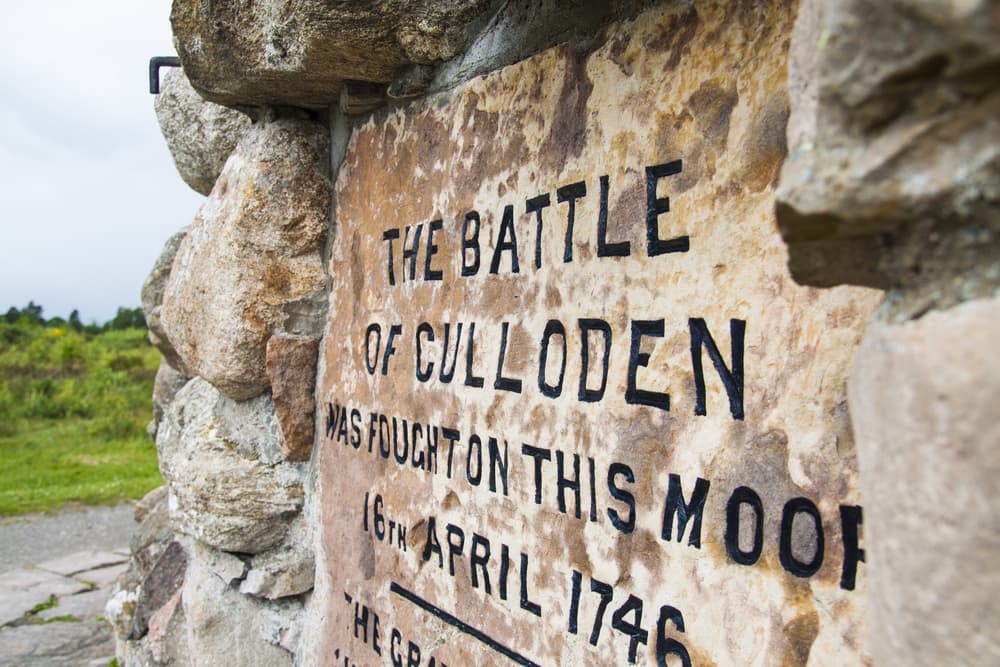
The Battle of Culloden was fought on 16 April 1746 on Drummossie Moor, a boggy heathland east of Inverness. It lasted under an hour. When it was over, the Jacobite Rising of 1745 — and with it, the last realistic hope of restoring the Stuart dynasty — was finished. The battle's aftermath reverberated across the Highlands for generations.
The Road to Culloden
After the retreat from Derby in December 1745, the Jacobite army had retreated northward but was still largely intact as a fighting force. They had won a further victory at Falkirk in January 1746. But the military situation was deteriorating: supplies were short, desertion was increasing, and the Duke of Cumberland was advancing from the south with a well-trained, well-supplied professional army.
The Jacobite army gathered around Inverness in the early weeks of 1746. Charles Edward Stuart and his commanders debated strategy. The choice of battlefield was to prove fatal.
The Battle
On the night of 15 April 1746, the Jacobite commanders made a last gamble: a night march to attack Cumberland's camp at Nairn, where the government forces were celebrating the Duke's birthday. The plan was to overwhelm the camp before dawn. The march began but the column became disordered in the dark, progress was slow, and dawn came before they were in position. The march was abandoned and the exhausted troops turned back.
On the morning of 16 April, Cumberland's army advanced. The Jacobite commanders chose to make a stand on Drummossie Moor. This choice has been criticised ever since. Lord George Murray had argued for ground better suited to the Highland charge — steep, enclosed terrain where discipline and firepower counted for less. The open boggy moor of Culloden gave the government's superior artillery and disciplined musketry every advantage.
The Jacobite army — perhaps 5,000 men, many of them exhausted from the night march — drew up on the moor. Many had not eaten for two days. Cumberland's force of around 9,000 troops was well rested and well fed. The government artillery opened fire first, and the Jacobite gunners were unable to reply effectively. The Jacobite line stood in the open, receiving artillery fire, for perhaps twenty minutes — an eternity under bombardment — before the order to charge was finally given.
The Highland charge, when it came, was ferocious on the right wing (where the Mackintoshes, Camerons, and Athollmen broke through the government first line), but ground to a halt on the centre and left. The left wing — the MacDonald regiments, traditionally given the place of honour on the right, which had been given to others this day — advanced slowly and never made contact.
The government troops, instructed to fire on the clansman to their right rather than straight ahead (to avoid the targe, the round Highland shield), maintained their volleys. Within thirty minutes the Jacobite army was broken and fleeing.
The Aftermath
The aftermath of Culloden was the darkest chapter in the episode's history. Cumberland ordered his troops to give no quarter on the field. Wounded Jacobites were killed where they lay. In the days that followed, government forces fanned out across the Highlands in a systematic campaign of terror: townships were burned, cattle driven off, suspected Jacobite sympathisers killed, and any resistance crushed without mercy. Cumberland earned the name 'Butcher Cumberland' — a title given by the Jacobites' sympathisers and later used in Hanoverian circles ironically.
The legal reprisals were equally severe. Captured Jacobite officers were tried and many executed. The executions of Jacobite lords — Lords Kilmarnock, Balmerino, and Lovat — became public events in London. The ranks of captured common soldiers were treated harshly: many were transported to the American colonies as indentured labourers.
The Disarming Acts and Cultural Suppression
The government's legislative response to the rising went beyond military reprisals. A series of measures were designed to destroy the social structure that had made the Highland risings possible:
The Disarming Acts (1746): All Highlanders were required to surrender their weapons. The wearing of Highland dress — the belted plaid, kilt, and tartan — was banned for non-military personnel. The playing of the bagpipes was banned (as a weapon of war, legally speaking). These measures struck at the outward symbols of Highland identity.
Abolition of Heritable Jurisdictions (1747): The traditional legal powers of Highland chiefs — their ability to administer justice and raise troops within their territories — were abolished. This dismantled the political infrastructure of the clan system. Chiefs were compensated financially but stripped of the powers that had made them small kings within the larger kingdom.
The Annexation Act: Forfeited Jacobite estates were annexed to the Crown and managed by commissioners appointed to 'improve' them — introducing Lowland agricultural methods and Protestant ministers.
The cumulative effect of these measures was to begin the transformation of the Highlands from a warrior pastoral society into an agricultural and eventually cleared landscape — a process that would accelerate over the following century in the Highland Clearances.
Visiting Culloden Today
Culloden Battlefield is managed by the National Trust for Scotland and is one of the most visited heritage sites in Scotland. It is located approximately 5 miles east of Inverness, off the B9006.
The visitor centre (opened 2007) is modern and well designed. It houses an extensive exhibition on the battle, its causes and consequences. There is an immersive battlefield experience — visitors walk through a recreated battle atmosphere. The centre also has a café, shop, and research facilities.
The battlefield itself is freely walkable around the site. Key features include:
- The clan grave markers — flat stones inscribed with clan names, marking approximate burial positions of the fallen. They date from the nineteenth century rather than the battle itself.
- The Memorial Cairn (1881) at the centre of the battlefield
- The Field of the English — marking the government army's dead
- The Old Leanach Farmhouse — a building that survived from the battle period, now interpreted as part of the site
- Interpretation panels across the moor explaining the battle lines, the charge, and the events
Walking the battlefield is a genuinely moving experience. The ground is still open moorland, and on a grey April day, it is easy to imagine the armies drawn up across the heather.
The site is open year-round, though the visitor centre has seasonal opening hours. Admission is charged for the visitor centre and car park. NTS members enter free.