
The Jacobite Story: An Overview
The Jacobite cause unfolded over exactly a century — from the deposition of James II in 1688 to the death of his grandson Charles Edward Stuart in 1788. It encompassed five risings, dozens of conspiracies, and the sustained loyalty of thousands of people across Scotland, England, Ireland, and the European continent.
The timeline below traces the key events of this period. For a deeper narrative account, see our article on what was the Jacobite rebellion.
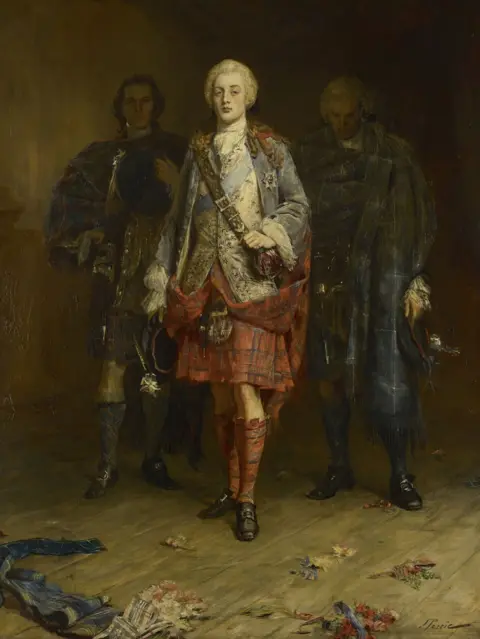
Bonnie Prince Charlie
At the centre of the Jacobite story stands Charles Edward Stuart — known to history as Bonnie Prince Charlie. Born in Rome in 1720, he was the grandson of the deposed James II and the living embodiment of the Stuart claim to the throne. In 1745 he sailed to Scotland with little more than a handful of supporters and launched the most dramatic of all the Jacobite risings. Within weeks he had taken Edinburgh, won the Battle of Prestonpans, and led his army deep into England. His retreat from Derby and ultimate defeat at Culloden in April 1746 ended the military Jacobite cause — but cemented his legendary status.
Jacobite Timeline
- 1688
The Glorious Revolution — James II deposed, William of Orange takes the throne
- 1689
First Jacobite Rising — Viscount Dundee ('Bonnie Dundee') raises the Stuart standard at Killiecrankie
- 1690
Battle of the Boyne — William III defeats James II in Ireland; James flees to France
- 1701
James II dies in exile at Saint-Germain-en-Laye; his son James Francis Edward Stuart proclaimed king by Louis XIV
- 1708
Failed French-backed invasion attempt; the fleet is scattered by storms
- 1715
The Fifteen — Earl of Mar raises the standard at Braemar; Battle of Sheriffmuir is inconclusive; rising collapses
- 1719
The Nineteen — Spanish-backed landing in Scotland; defeated at Battle of Glenshiel
- 1720
James Francis Edward Stuart ('The Old Pretender') settles in Rome; marries Maria Clementina Sobieski
- 1720
Charles Edward Stuart ('Bonnie Prince Charlie') born in Rome
- 1744
France plans invasion of Britain; fleet dispersed by storms in the Channel
- 1745
The Forty-Five — Charles raises the standard at Glenfinnan on 19 August
- 1745
Jacobite army takes Edinburgh; Charles holds court at Holyrood
- 1745
Battle of Prestonpans — Jacobite victory; army advances into England
- 1745
Jacobites reach Derby — closest point to London; council votes to retreat
- 1746
Battle of Falkirk — last Jacobite victory in the campaign
- 1746
Battle of Culloden — 16 April; Jacobite army crushed in under an hour; end of the Forty-Five
- 1746
The Aftermath — Cumberland's forces conduct brutal reprisals across the Highlands
- 1746
Bonnie Prince Charlie hides in the heather; aided by Flora MacDonald, escapes to France in September
- 1766
James Francis Edward Stuart dies; Charles Edward Stuart claims the throne as Charles III
- 1788
Charles Edward Stuart dies in Rome; the Stuart cause effectively ends
After the Timeline: The Cultural Legacy
The Jacobite timeline does not end in 1788. After the death of Bonnie Prince Charlie, the cause had no credible political future — but its cultural legacy expanded dramatically.
The great Scottish novelist Walter Scott (1771–1832) romanticised the Highland past and the Jacobite cause in novels like Waverley (1814) and Rob Roy (1817). Scott organised the famous visit of King George IV to Edinburgh in 1822 — the first visit by a reigning monarch to Scotland in nearly 200 years — in a spectacle of tartans and Highland pageantry that transformed how both Scotland and England imagined the Highlands.
Robert Burns contributed Jacobite-sympathetic songs that became part of Scottish folk culture. The image of the loyal Highland clansman, the romantic fugitive prince, and the defeated but noble cause became embedded in Scottish identity.
Queen Victoria's love of the Highlands — Balmoral, Highland games, tartan — gave the romanticised Highland-Jacobite image a Victorian seal of approval. The tourist industry that followed, and persists to this day, owes much to this romanticisation.
The Jacobite Steam Train crosses the Glenfinnan Viaduct, close to where the standard was raised in 1745, daily throughout the summer season. Every year, visitors from across the world come to Glenfinnan to look at the monument and to watch the steam train cross the valley. The Jacobite story — 300 years old — remains powerfully alive.